Why Hiring Construction Equipment Is the Smartest Choice for Your Next Project
January 21, 2026
Hydraulic vs Manual Concrete Skips: What’s the Difference?
June 16, 2026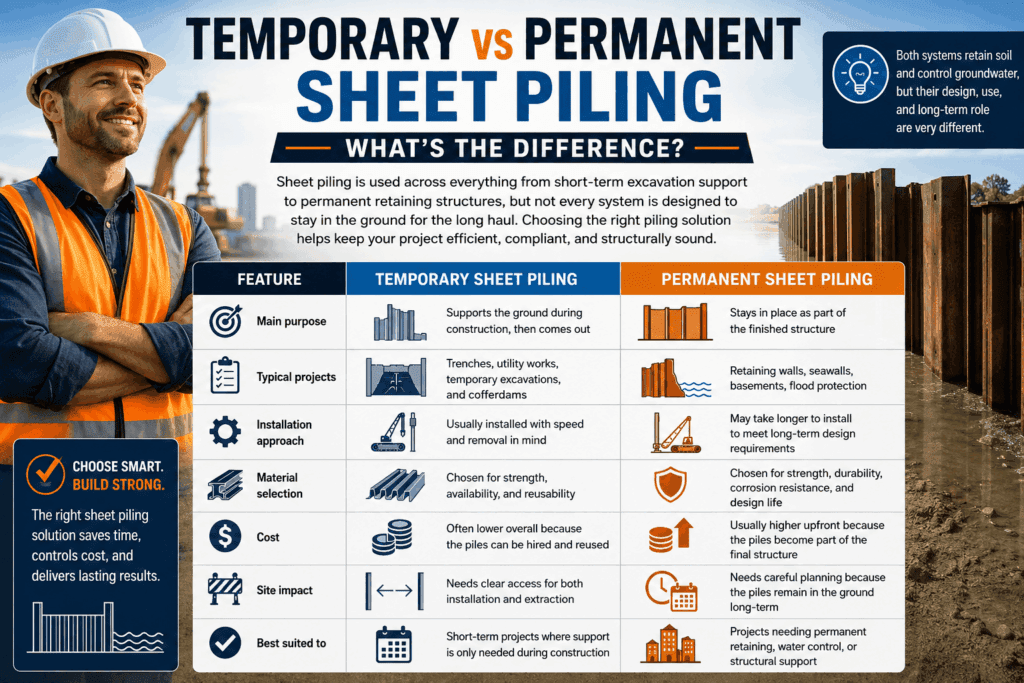
Temporary vs Permanent Sheet Piling: What’s the Difference?
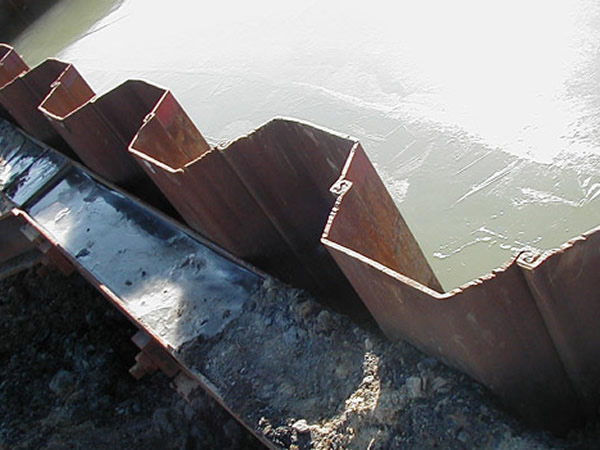
Sheet piling is used across everything from short-term excavation support to permanent retaining structures, but not every system is designed to stay in the ground for the long haul. Some piles are installed purely to stabilise a site during construction, while others become part of the finished structure itself.
Understanding the difference between temporary sheet piling and permanent sheet piles matters because it affects project cost, installation methods, design requirements, and long-term performance. Whether you’re managing a civil excavation, marine project, or large-scale infrastructure job, choosing the right piling solution helps keep the project efficient, compliant, and structurally sound.
Key Differences Between Temporary & Permanent Sheet Piling
While both systems perform the same core function, retaining soil and controlling groundwater, the way they’re designed and used differs considerably. Temporary sheet piling focuses on short-term efficiency and removability, while permanent sheet piles are engineered for durability and ongoing structural performance.
|
Feature |
Temporary Sheet Piling |
Permanent Sheet Piling |
|
Main purpose |
Supports the ground during construction, then comes out |
Stays in place as part of the finished structure |
|
Typical projects |
Trenches, utility works, temporary excavations, and cofferdams |
Retaining walls, seawalls, basements, flood protection |
|
Installation approach |
Usually installed with speed and removal in mind |
May take longer to install to meet long-term design requirements |
|
Material selection |
Chosen for strength, availability, and reusability |
Chosen for strength, durability, corrosion resistance, and design life |
|
Cost |
Often lower overall because the piles can be hired and reused |
Usually higher upfront because the piles become part of the final structure |
|
Site impact |
Needs clear access for both installation and extraction |
Needs careful planning because the piles remain in the ground long-term |
|
Best suited to |
Short-term projects where support is only needed during construction |
Projects needing permanent retaining, water control, or structural support |
Common Industries That Use Sheet Piling
Sheet piling is used across New Zealand projects where ground needs to be held back, water needs to be controlled, or excavation needs to stay safe and workable. It is common on sites with soft ground, high groundwater, tight access, or nearby roads, services, and structures. The right system depends on whether the support is only needed during construction or will form part of the finished works.
Civil Construction
Civil contractors use temporary sheet piling for trench support, stormwater upgrades, wastewater works, pump stations, culverts, and service installations. It’s especially useful where excavation needs to stay narrow, stable, and safe. On busy roads or constrained sites, sheet piles help reduce the amount of open excavation required. This can make the job easier to manage around traffic, existing services, and neighbouring properties.
Marine & Coastal Infrastructure
Permanent sheet piles are widely used around wharves, seawalls, boat ramps, retaining structures, and erosion protection works. New Zealand’s coastal conditions can be demanding, so pile selection needs to account for water pressure, corrosion risk, ground movement, and long-term exposure. Temporary sheet piling may also be used to create dry or controlled work areas during marine construction. In these settings, installation planning is just as important as the sheet pile itself.
Transport & Infrastructure
Roading, rail, bridge, and public infrastructure projects often rely on sheet piling during excavation and retaining works. Temporary sheet piling can support bridge abutment works, underpasses, drainage upgrades, and retaining wall construction. Permanent sheet piles may be used where long-term ground retention is required beside roads, rail corridors, waterways, or embankments. These projects usually need careful coordination because access, vibration, noise, and programme timing all matter.
Commercial & Industrial Sites
Commercial and industrial projects use sheet piling for retaining walls, service trenches, plant upgrades, loading areas, and site preparation works. This is common on constrained sites where excavation needs to happen close to existing buildings, yards, boundaries, or underground services. Temporary sheet piling can support construction works, while permanent sheet piles may be used for long-term retaining or water control. The key is choosing a system that suits both the build phase and the finished site layout.
Foundation Drilling & Ground Engineering
Sheet piling and pile casing are often used alongside piling and drilling works to maintain stability in difficult ground. Pile casing helps support boreholes during foundation drilling, particularly in soft soils, loose material, or waterlogged ground. Sheet piles may also be used to stabilise excavations around foundations, shafts, retaining structures, and temporary works areas. This helps improve safety, accuracy, and site control while deeper foundation work is completed.
Which Type of Sheet Piling Is Best for Your Project?
The right option depends on whether the sheet piles are needed during construction only, or whether they need to remain in place as part of the finished works. Temporary sheet piling is usually the best fit for trenching, stormwater upgrades, utility works, pump stations, culverts, and short-term excavation support. It gives crews a safer, more controlled work area, which can then be removed once the job is complete. Because the piles can often be reused, it’s also a practical option for staged works or projects with a tight construction programme.
Permanent sheet piles are better suited to projects that need ongoing retention or water control after construction ends. This includes seawalls, wharf works, flood protection, bridge approaches, retaining walls, and infrastructure near waterways or unstable ground. These piles need to be specified with long-term load, corrosion, groundwater, and exposure conditions in mind. They may take longer to plan and install because they form part of the final structure, not just the temporary works package.
Site conditions should guide the final decision. Soft ground, high groundwater, restricted access, nearby roads, existing services, and vibration limits can all affect pile selection. The best approach is to assess the ground, the programme, and the end use before choosing between temporary sheet piling and permanent sheet piles.
Need Help Choosing the Right Sheet Piles?
Not sure whether your project needs temporary sheet piling, permanent sheet piles, or pile casing? Pilehire supplies a wide range of sheet piles for hire and sale, with options suited to excavation support, retaining works, marine projects, and piling and drilling jobs.
Get in touch with our team for practical advice on the best fit for your site, programme, and ground conditions.