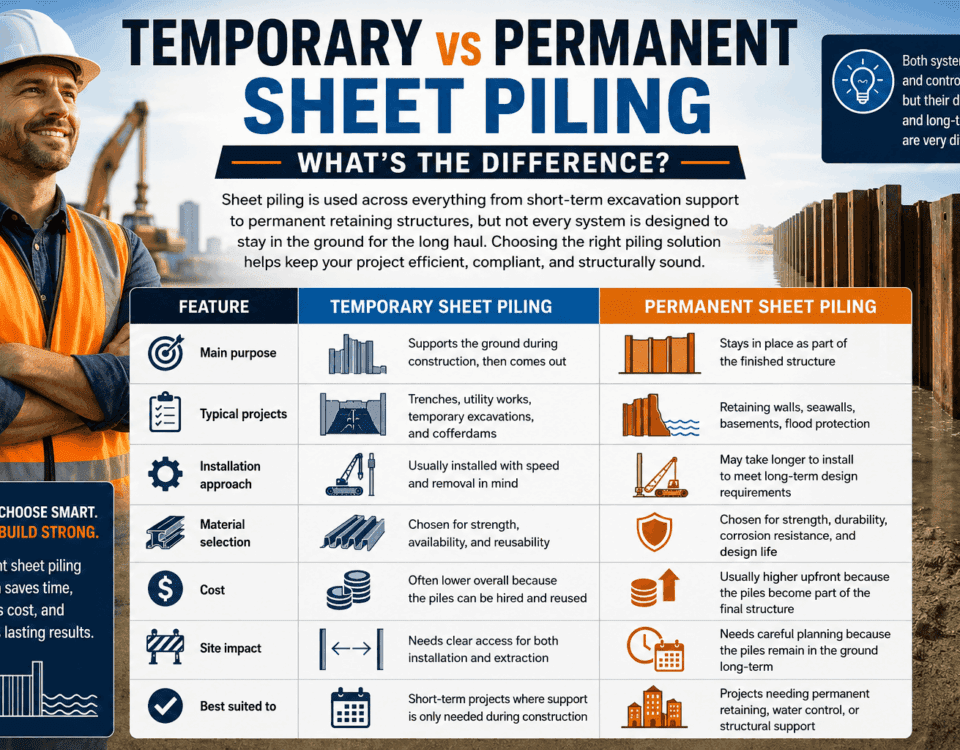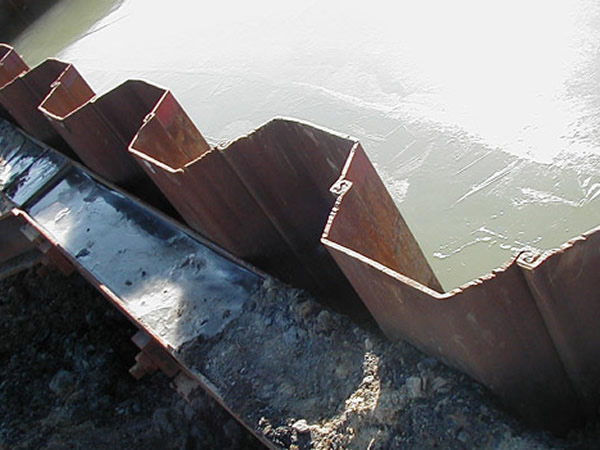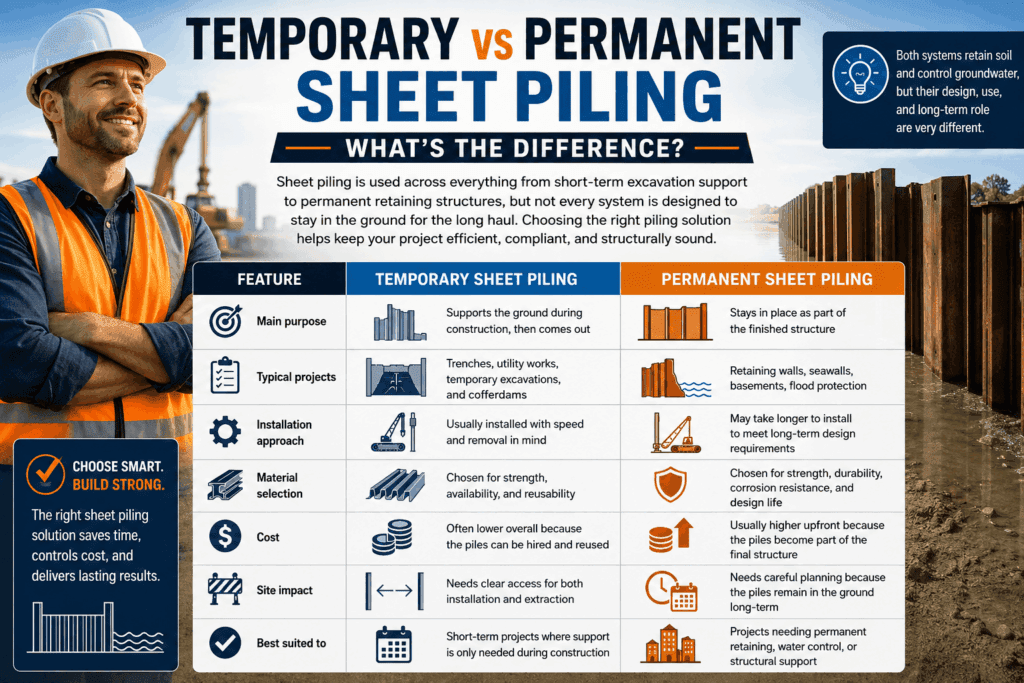
Temporary vs Permanent Sheet Piling: What’s the Difference?
June 16, 2026
Hydraulic vs Manual Concrete Skips: What’s the Difference?
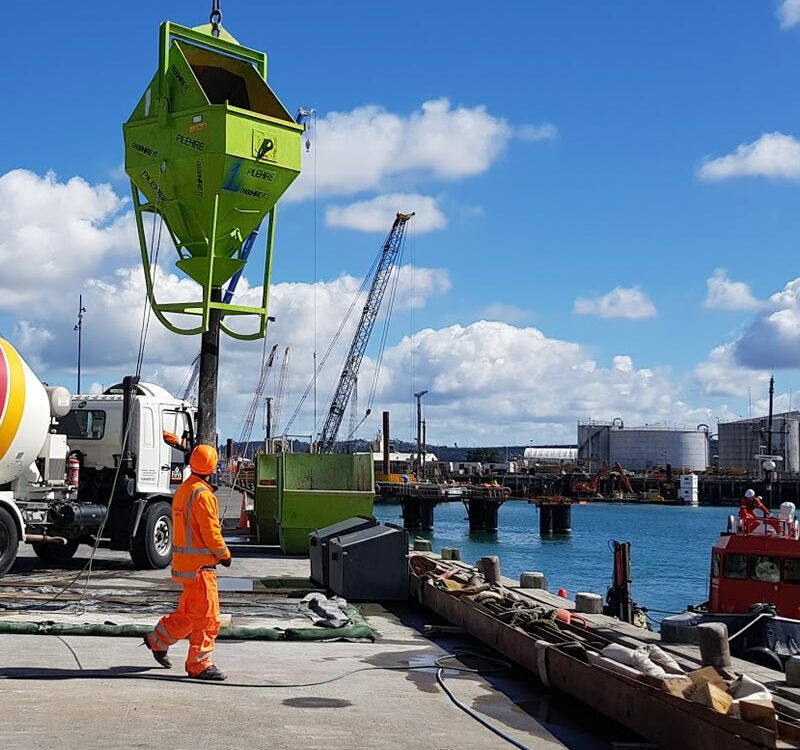
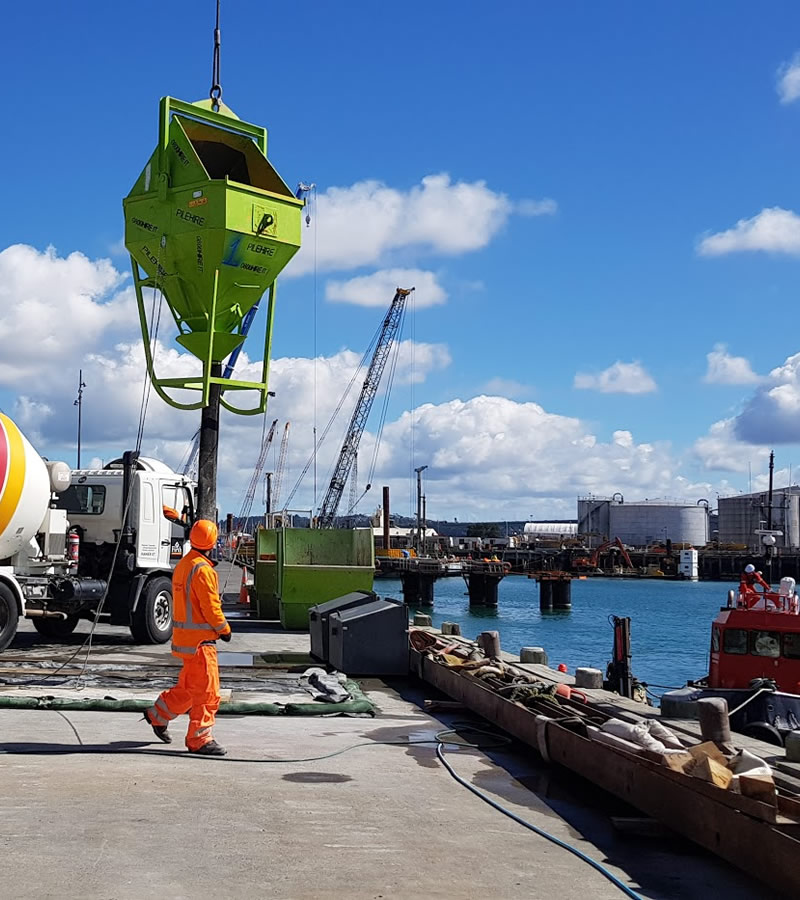
Concrete skips do one job: move and place concrete safely and accurately where standard pours are impractical. Whether it’s a suspended slab, column formwork, trench, or elevated pour, the right skip helps keep concrete placement controlled, efficient, and safe on-site.
The main choice comes down to hydraulic or manual operation. Both are widely used across New Zealand construction projects, but they suit different site conditions, pour sizes, and placement requirements. Understanding the difference helps avoid delays, messy pours, and equipment that is either overkill or not up to the task.
What Is a Manual Concrete Skip?
A manual concrete skip uses a simple mechanical release system to control the concrete pour. Once lifted into position by crane or lifting equipment, the operator manually opens the chute or gate to discharge the concrete where needed.
Manual concrete skips are popular because they are straightforward, reliable, and easy to use. They work well for smaller pours, standard formwork, trenches, footings, and general construction work where highly precise flow control is not essential. Fewer moving parts also mean less maintenance and fewer complications on busy sites.
They are commonly chosen for residential builds, low-rise commercial projects, and civil works where practicality matters more than automation. For many contractors, manual concrete skips remain the go-to option because they are dependable and cost-effective without adding unnecessary complexity.
What Is a Hydraulic Concrete Skip?
Hydraulic concrete skips use a hydraulic ram system to control the opening and closing of the discharge chute. This allows for smoother, more controlled concrete placement, particularly on larger or more technically demanding pours.
Hydraulic concrete skip hire is often preferred on projects where precision matters. High-rise construction, large commercial pours, bridge works, and heavily reinforced formwork can all benefit from better flow control during placement. Instead of manually operating the discharge, the hydraulic system allows operators to regulate the pour more accurately and consistently.
This additional control can help reduce spillage, improve placement efficiency, and minimise interruptions during large pours. While hydraulic skips are generally more complex and cost more to hire, they are often worth it on projects where pour accuracy and productivity are priorities.
Key Differences Between Hydraulic & Manual Concrete Skips
|
Feature |
Manual Concrete Skip |
Hydraulic Concrete Skip |
|
Operation |
Manual opening and closing mechanism |
Hydraulic ram controls the discharge |
|
Best suited to |
Standard pours, trenches, footings, smaller projects |
Large pours, high-rise work, precise placement |
|
Flow control |
Basic controlled discharge |
More consistent and accurate discharge control |
|
Complexity |
Simple design with fewer moving parts |
More advanced system with hydraulic components |
|
Maintenance requirements |
Lower maintenance requirements |
Requires hydraulic system maintenance and checks |
|
Cost |
Generally lower hire cost |
Typically higher hire cost |
|
Pour precision |
Suitable for general placement |
Better for controlled or technical pours |
|
Common project types |
Residential, civil, small commercial works |
Commercial, infrastructure, large-scale construction |
Which Type of Concrete Skip Is Best for Your Project?
The right skip heavily depends on the scale of the pour, the level of control needed, and the site conditions.
Manual concrete skips are often the best option for straightforward pours where simplicity and reliability matter most. They’re practical for footings, trenches, slabs, retaining walls, and smaller construction projects where the concrete can be placed without highly controlled flow rates.
Hydraulic concrete skips are better suited to larger or more complex pours where precision becomes more important. Projects involving suspended slabs, columns, elevated pours, or congested reinforcement often benefit from smoother discharge control and more accurate concrete placement.
Access and lifting equipment should also be considered. Site layout, crane capacity, pour volume, and operator visibility can all influence the most suitable skip type. Choosing the right equipment early helps keep pours moving efficiently and reduces unnecessary handling or delays on-site.
Common Applications for Concrete Skips
Concrete skips are used across New Zealand construction and civil sites where concrete needs to be placed safely, accurately, or in areas that are difficult to access by truck or pump. They are particularly useful for:
- Footings, foundations, and pile caps where concrete needs to be lowered directly into excavated areas.
- Trenches, channels, and drainage works where controlled placement helps reduce mess and rework.
- Columns, walls, and formwork where the pour needs to be directed cleanly into position.
- Elevated decks, suspended slabs, and multi-level construction, where crane access is already part of the site setup.
- Bridge works, retaining structures, culverts, and other civil infrastructure projects with awkward pour locations.
- Tight or restricted sites where pump trucks or direct concrete truck access may not be practical.
Need Help Choosing the Right Concrete Skip?
Not sure whether your project is better suited to a manual or hydraulic concrete skip? Pilehire supplies a range of concrete skips for hire, with options suited to civil works, commercial construction, elevated pours, and restricted-access sites.
Get in touch with our team for practical advice on the right concrete skip for your pour size, site conditions, and lifting setup.