Sheet Piling: A Complete Guide
September 16, 2025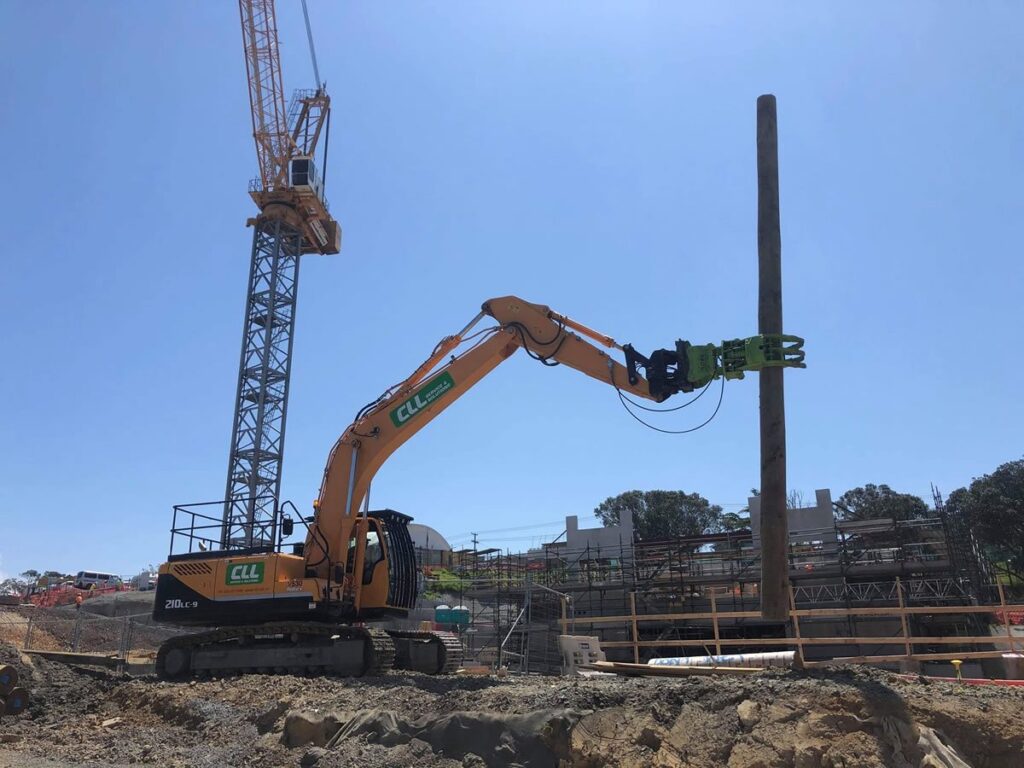
Excavator Grabs & Grapples
Grabs and grapples turn your digger from a basic tool into a proper material mover. Whether you’re building retaining walls, clearing sites, or gutting a demolition job, the right attachment makes the difference between getting it done properly and just getting by.
This guide covers the main types of excavator grabs and grapples, what each one does best, and how to choose the right model for your task. Plus, we’ve included key tips to keep in mind when hiring, and why working with a specialist like Pilehire gives you more than just a piece of kit.
Common Types of Grabs and Grapples
There’s no one-size-fits-all here. The right grab depends entirely on what you're lifting, shifting, or smashing through.
Pitching Grabs
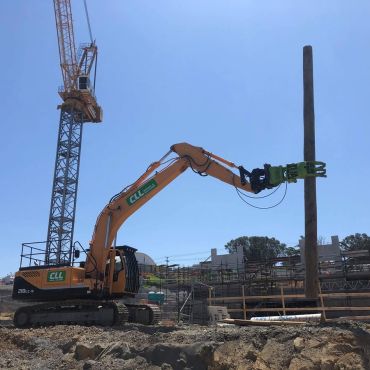
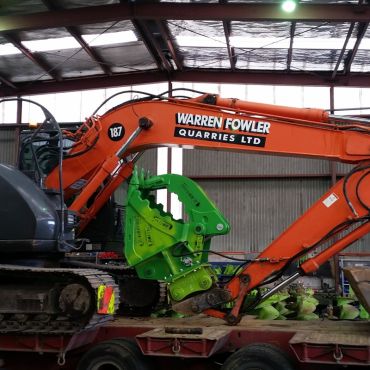
Pitching grabs are built for precision. Designed to position and place items with care, they’re often used for landscaping tasks like building rock walls, installing gabion baskets, or shifting boulders into place. They’re equally at home in civil and foundation work, where they can handle, align and position timber or steel piles accurately before driving. Operators can move material delicately without crushing it, thanks to the multi-directional grip and rotation. For projects that call for finesse over brute strength, pitching grabs are the go-to choice.
Grab Buckets
Grab buckets combine the functionality of a bucket with clamping arms, allowing for secure handling of loose or awkward materials. They’re ideal for timber, scrap metal, green waste, or anything that needs controlled lifting without spill. The enclosed design reduces slop and mess, making them popular on mixed-material sites. If your job jumps between tasks like clearing a yard, then loading out, grab buckets offer real versatility without swapping attachments every five minutes.
Bulk Grabs
Bulk grabs are made for volume. These are your open-jawed, heavy-duty grapples for demolition clean-ups, brush removal, or log handling. Built to shift large, irregular materials fast, they’re usually seen on jobs where speed and capacity win out over delicate control. Reinforced tines and open frames let debris fall through while holding the bigger stuff tight. For operators who need to make quick work of large piles, this is the heavy-lifter of the bunch.
Piling Grabs
Piling grabs are built for moving, positioning or extracting driven or drilled piles and heavy foundation elements with control. These attachments typically feature strong, reinforced arms or jaws capable of gripping cylindrical or rectangular piles, sheet-piles or caisson sections, and are often paired with hydraulic rotation or tilt mechanisms to align and place the pile precisely.
Specialised Grabs
Not every job is about moving volume. Some tasks need precision, bite, or brute-force resilience. Specialised grabs are designed for targeted use, handling challenging materials that standard grapples might struggle with.
Rock Grabs
Rock grabs feature serrated, interlocking arms that grip uneven surfaces securely, ideal for handling large boulders, angular stone, and awkward loads. Their design gives you controlled lift without slippage, making them popular in landscaping, rock wall building, and civil works. If your material won’t sit flat or behave, a rock grab holds it steady.
Demolition Grabs
Demolition grabs are engineered for raw strength. Heavily reinforced and made to withstand shock loads, they tear through timber, masonry, scrap and twisted rebar without buckling. Wide openings allow for bulk pickup, while toughened edges handle the sharp stuff. When the jobsite is brutal and precision takes a back seat, this is your go-to.
Tree Felling Grabs
Tree felling grabs combine gripping arms with hydraulic shears or saws, allowing you to cut, catch and control trees in one motion. They're ideal for controlled directional felling, clearing timber near infrastructure, or thinning plantations. Fewer moving parts on site means faster, safer takedowns, especially where precision or restricted fall zones matter.
Rotating Grabs
Rotating grabs offer 360-degree movement, giving operators total control over positioning. Perfect for sorting, loading or working in confined spaces, they allow the grab to stay put while the machine stays still. Whether you're working on uneven ground or need to place materials with accuracy, rotation adds serious flexibility to any job.
SED Grabs
Sediment grabs (also called marine grabs) are purpose-designed for lifting, sampling or relocating deposits of soft or loose material such as mud, sludge, silt or seabed sediment. SED grapples may resemble clamshell buckets or multi-tine grapples, and are engineered to close around the material, prevent spillage, and cope with underwater or high-moisture conditions. They are commonly used in dredging, port-work, environmental clean-up or underwater civil works where standard grabs would lose grip or become clogged.
Choosing the Right Grab for Your Job
Picking the right grab starts with one question: What are you moving? If you’re placing boulders, pitching grabs or rock grabs will give you control without crushing. Clearing timber, scrap or green waste? Grab buckets offer enclosed handling, while bulk grabs shift high volumes fast. For demolition, you’ll want a reinforced grapple built for impact.
Next, factor in your working environment. Tight urban site? A rotating grab gives you flexibility without constant repositioning. Working on slope or soft ground? You’ll need to check lift limits and stability with your excavator. Don’t overlook hydraulic flow either; some grabs need specific pressure or flow rates to work properly.
There’s no value in over-speccing if your job doesn’t demand it. At the same time, under-speccing slows everything down and increases risk. If you're unsure, talk to a supplier who actually understands site work. At Pilehire, we match the right attachment to your machine, job, and working conditions so you get it right the first time.
Hire Tips: What to Know Before You Book
Hiring a grab sounds simple until you’re halfway through loading out and nothing fits. Here’s what to check upfront.
- Site access and transport: Make sure there’s space for delivery and setup. Grabs can be wide or awkward to unload, especially if you're on a sloped or tight site. Let the supplier know your access constraints.
- Weight and hydraulic compatibility: Your machine needs to match the grab’s weight and hydraulic demands. A grab that’s too heavy or underpowered leads to strain, delays, or worse, unsafe operation.
- Operator skill level: Some grabs, like rotating or tree shears, take finesse. If you’re hiring for the first time or using a new operator, it might be worth starting with a simpler setup.
- Quick coupler compatibility: Check your coupler type: pin size, spacing and style matter. One mismatch and you’ve got a paperweight on your hands.
- How Pilehire helps: We don’t leave it to guesswork. Pilehire confirms fitment, coupler type and hydraulic specs before delivery.
Why Hire Excavator Grabs from Pilehire
At Pilehire, we don’t just supply gear, we match it to what actually happens on site. Our grab range is built for real NZ conditions, whether you’re clearing forestry blocks, tackling demolition, or placing rock with precision on a tight spec.
Every attachment is fully inspected, serviced and ready to go before it reaches your job. No missing hoses. No last-minute surprises. Just solid, reliable gear that’s been properly set up.
And because we know the gear inside out, you get more than just a rental. We’ll help you choose the right grab, make sure it fits your machine, and offer support if anything crops up. That way, you spend less time sorting problems and more time getting on with the job.
If you’re ready to hire a grab that fits your machine and your job, get in touch with Pilehire or check out our range online.